Showing posts with label asteroid impact. Show all posts

Monday, February 13, 2023

Small Asteroid 2023 CX1 (NEOCP Sar2667) impacted Earth on February 13

On 2023 February 12.8 (20:18:07 UTC), K. Sarneczky found a small asteroid with the 0.60-m Schmidt + CCD of the Piszkéstető Observatory in Hungary (K88 MPC code) that was soon after put on the NEOCP list with the provisional designation Sar2667 for the follow-up by other observers. The object was subsequently imaged by many observers around the world and various impact assessment systems found a 100% impact probability in the area of the English Channel on Feb. 13 between 02 and 04 UTC. This is the second discovery by Sarneczky of an impactor, following the 2022 EB5 event in March 2022.

M.P.E.C. 2023-C103 issued subsequently on 2023 February 13 at 04:13 UT assigned the official designation 2023 CX1 to Sar2667 with the following comment:

K. Sarneczky reported a new NEOCP candidate observed at GINOP-KHK (K88). Rapid follow-up from multiple sites indicated an impact with the Earth's  atmosphere on February 13 03:00 UTC near the coast of Normandy, France, as determined by imminent impact monitoring services such as JPL's Scout, ESA's Meerkat and MPC's internal warning system.

Map of the impact zone predicted to occur a few kilometers from French coast, North-East of Le Havre. Click on it for a bigger version.

Credit: IMO


2023 CX1 was a small Aten asteroid with an estimated size of ~1.0 m (based on the object's absolute magnitude H=32.6). 

Below you can see the discovery images of 2023 CX1 taken at Konkoly Observatory's Piszkéstető Station with the 0.60-m Schmidt telescope. Three 4x25 sec stacked images with the object at 19.5 magnitude.

Credit: K. Sarneczky 


We performed follow-up measurements of this object while it was still on the NEOCP webpage and about 4 hours before the impact. Images obtained at the ALMO Observatory, in Padulle, Italy (G18 MPC code). Click on the image below for a bigger version. 

Credit: A. Valvasori, E. Guido


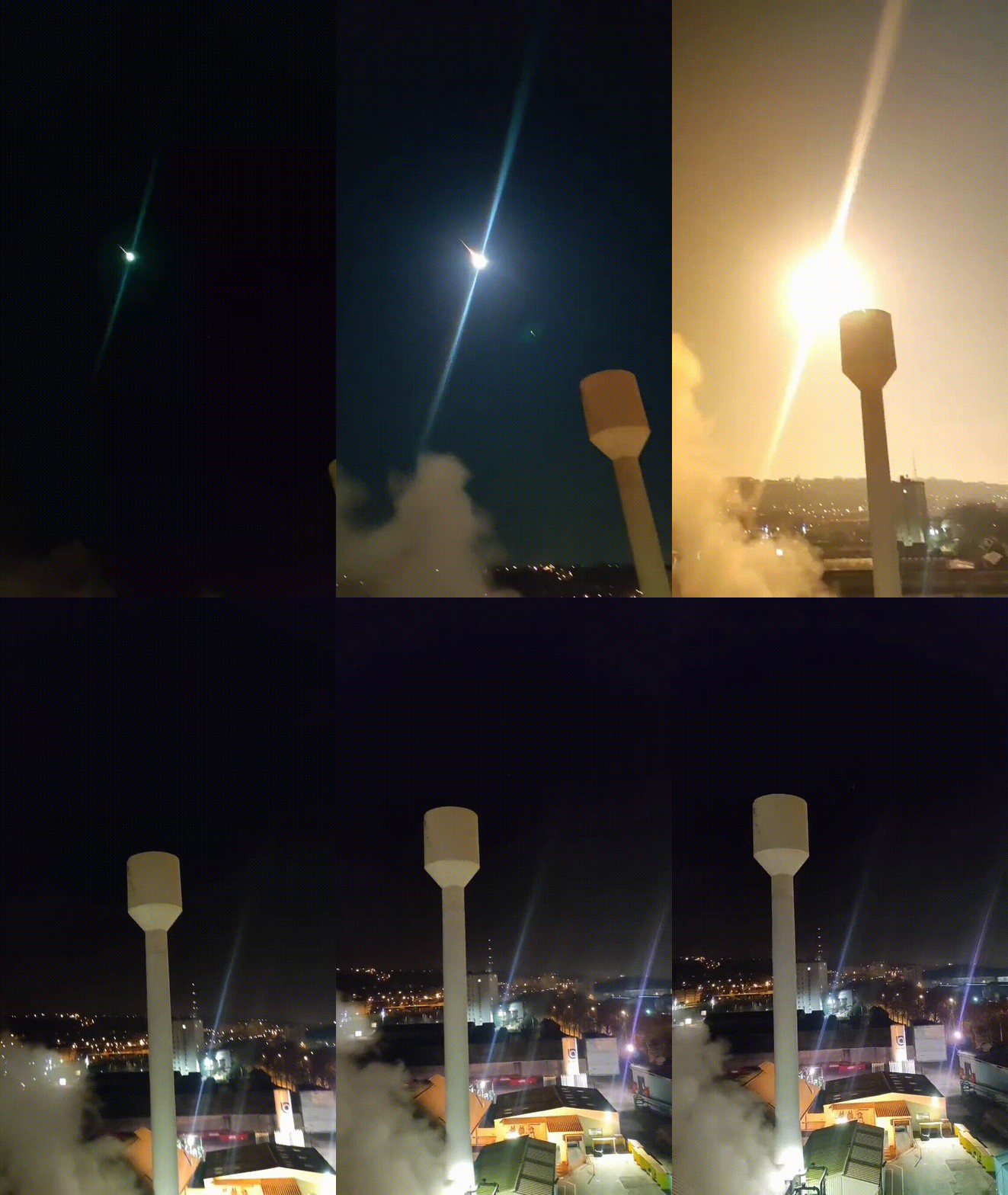
As expected, 02h 59min UT, 2023 CX1 entered the Earth atmosphere, producing a very bright fireball that was reported by dozens of witnesses and recorded on video by many thanks to favorable weather conditions over the involved densely populated area and the alert issued few hours in advance by astronomers. Below some of the best videos and photos posted on the web.


Credit: Gijs de Reijke


Credit: BNO News


Credit: Kevin


Credit: KrisztiUk


2023 CX1 became the 7th asteroid to be discovered before entering the Earth atmosphere. The first time it happened was with asteroid 2008 TC3, the second was with asteroid 2014 AA, the third was 2018 LA that impacted Earth on 02 June 2018, the fourth was with asteroid 2019 MO that impacted Earth on 22 June 2019 , the fifth was the asteroid 2022 EB5, the sixth was the asteroid 2022 WJ1 less than 3 months ago. Another space impacting object discovered prior to its to atmospheric entry was WT1190F but it is thought to have been a space debris, possibly  the translunar injection module of Lunar Prospector. For more info about 2008 TC3, 2014 AA, 2018 LA, 2019 MO, 2022 EB5 and 2022 WJ1 see also:

http://remanzacco.blogspot.it/2008/10/small-asteroid-2008-tc3-to-hit-earth.html

http://remanzacco.blogspot.com/2008/10/2008-tc3-animation.html

http://remanzacco.blogspot.com/2008/10/2008-tc3-update-impact-flash-imaged.html

http://remanzacco.blogspot.com/2008/11/2008-tc3-trail-imaged-over-northern.html

http://remanzacco.blogspot.it/2009/02/2008-tc3-fragments-recovered.html

http://remanzacco.blogspot.com/2014/01/small-asteroid-2014-aa-hit-earths_2.html

https://remanzacco.blogspot.com/2018/06/small-asteroid-2018-la-impacted-earth.html

https://remanzacco.blogspot.com/2019/06/small-asteroid-neocp-a10eom1-impacted.html

https://remanzacco.blogspot.com/2022/03/small-asteroid-2022-eb5-neocp-sar2593.html

https://remanzacco.blogspot.com/2023/02/small-asteroid-2022-wj1-neocp-c8ff042.html

http://remanzacco.blogspot.com/search/label/asteroid%20impact 


by Ernesto Guido

Friday, November 25, 2022

Small Asteroid 2022 WJ1 (NEOCP C8FF042) impacted Earth on November 19

On 2022 November 19.2,  D. Rankin found a small asteroid using the 1.5-m reflector + 10K CCD of Mt. Lemmon Catalina Sky Survey (G96 MPC code) that was soon after put on the NEOCP list with the provisional designation C8FF042 for the follow-up by other observers. The Minor Planet Center subsequently assigned the following official designation to this object, 2022 WJ1.

Richard A. Kowalski of CSS at 06:20UT of Nov. 19 alerted on mpml mailing list "...it appears that this object (C8FF042) will impact around the Great Lakes region of the United States a few hours from the time of this message". According to Bill Gray the impact point was at 19 Nov 2022 8:26:54.47 UTC, lat +43.12309, lon W80.26416, directly over Brantford, Ontario, Canada.

Discovery images of asteroid 2022 WJ1

Credit: Catalina Sky Survey


M.P.E.C. 2022-W69 issued subsequently on 2022 November 19 at 14:14 UT assigned the official designation 2022 WJ1 to C8FF042 with the following comment:

D. Rankin detected a fast moving object in images taken at Mt. Lemmon Survey (G96). The observations triggered a warning of an imminent impact.  Seven observatories were able to observe the sub-meter object before it  impacted the Earth's atmosphere on Nov. 19 at approximately 08:27 UTC over  Brantford, Ontario, Canada.

2022 WJ1 was a small Apollo asteroid with an estimated size of 0.5 m - 1.0 m (based on the object's absolute magnitude H=33.6). 

This is the sixth time in history that an impacting object is observed prior to atmospheric entry. The first time it happened was with asteroid 2008 TC3, the second was with asteroid 2014 AA, the third was 2018 LA that impacted Earth on 02 June 2018, the fourth was with asteroid 2019 MO that impacted Earth on 22 June 2019 and the fifth was the asteroid 2022 EB5. Another space impacting object discovered prior to its to atmospheric entry was WT1190F but it is thought to have been a space debris, possibly  the translunar injection module of Lunar Prospector. For more info about 2008 TC3, 2014 AA, 2018 LA, 2019 MO and 2022 EB5 see also:


http://remanzacco.blogspot.it/2008/10/small-asteroid-2008-tc3-to-hit-earth.html

http://remanzacco.blogspot.com/2008/10/2008-tc3-animation.html

http://remanzacco.blogspot.com/2008/10/2008-tc3-update-impact-flash-imaged.html

http://remanzacco.blogspot.com/2008/11/2008-tc3-trail-imaged-over-northern.html

http://remanzacco.blogspot.it/2009/02/2008-tc3-fragments-recovered.html

http://remanzacco.blogspot.com/2014/01/small-asteroid-2014-aa-hit-earths_2.html

https://remanzacco.blogspot.com/2018/06/small-asteroid-2018-la-impacted-earth.html

https://remanzacco.blogspot.com/2019/06/small-asteroid-neocp-a10eom1-impacted.html

https://remanzacco.blogspot.com/2022/03/small-asteroid-2022-eb5-neocp-sar2593.html

http://remanzacco.blogspot.com/search/label/asteroid%20impact 


by Ernesto Guido

Saturday, March 12, 2022

Small Asteroid 2022 EB5 (NEOCP Sar2593) impacted Earth on March 11

On 2022 March 11.80, K. Sarneczky found a small asteroid using the 0.60-m Schmidt + CCD of GINOP-KHK, Piszkesteto (K88 MPC code) that was soon after put on the NEOCP list with the provisional designation Sar2593 for the follow-up by other observers. The Minor Planet Center subsequently assigned the following official designation to this object 2022 EB5.


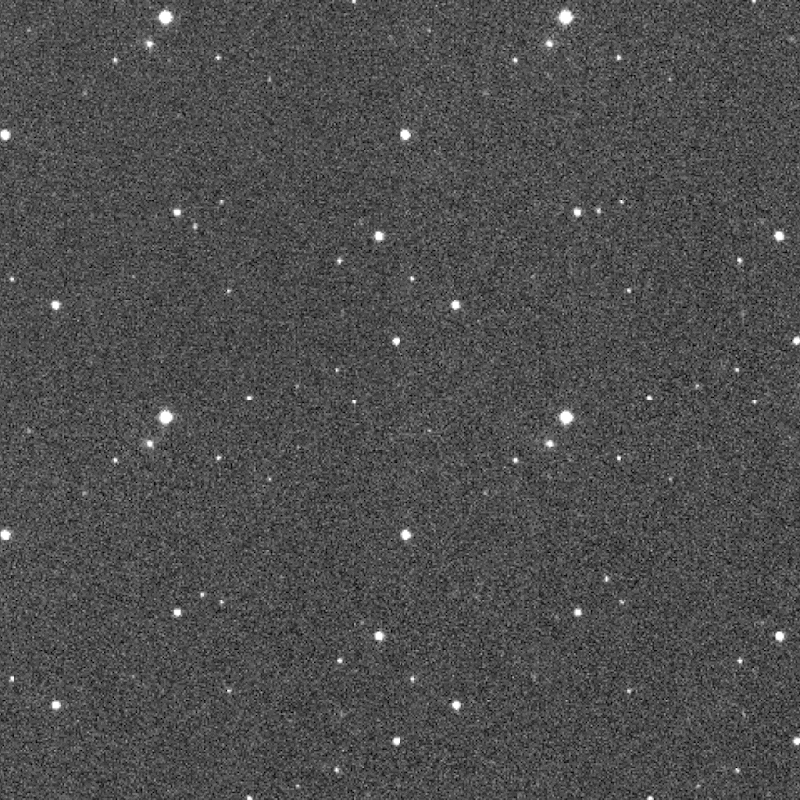
Discovery images (19:25UT) of asteroid 2022 EB5

Credit: K. Sarneczky 


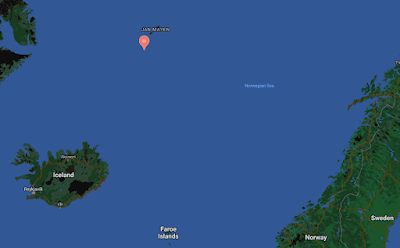
At 20:46UT of March 11, Bill Gray sent an alert in the MPML mailing list about the impact of Sar2593 with the Earth's atmosphere and: "to urge European observers to take a look for this object, currently on NEOCP.  It should come in at 21:23 UTC at latitude +70.47, longitude W 10.40,  plus or minus a few dozen km.  That's about forty minutes from "right now",  a bit north of Iceland". Below you can see a map of the impact location as calculated by Gray, southwest of Jan Mayen island.


Credit: B. Gray


Below an animation showing the impact trajectory 

Credit: T. Dunn


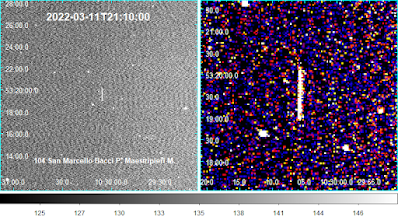
Below a follow-up image obtained by P. Bacci & M. Maestripieri at the San Marcello Pistoiese Observatory (104 MPC code) just about 15 minutes before its impact. 

Credit: Gamp/UAI

2022 EB5 is a small Apollo asteroid with an estimated size of 1.0 m - 2.3 m (based on the object's absolute magnitude H=32.1). 2022 EB5 impact infrasound  detection in Greenland had been published by P. Brown: "From this data yield is approximately 2-3 kT TNT. At 15 km/s, this is roughly 3-4 m diameter".

Credit: P. Brown


This is the fifth time in history that an impacting object is observed prior to atmospheric entry. The first time it happened was with asteroid 2008 TC3, the second was with asteroid 2014 AA, the third was 2018 LA that impacted Earth on 02 June 2018, the fourth was with asteroid 2019 MO that impacted Earth on 22 June 2019. Another space impacting object discovered prior to its to atmospheric entry was WT1190F but it is thought to have been a space debris, possibly  the translunar injection module of Lunar Prospector. For more info about 2008 TC3, 2014 AA, 2018 LA and 2019 MO see also:


http://remanzacco.blogspot.it/2008/10/small-asteroid-2008-tc3-to-hit-earth.html

http://remanzacco.blogspot.com/2008/10/2008-tc3-animation.html

http://remanzacco.blogspot.com/2008/10/2008-tc3-update-impact-flash-imaged.html

http://remanzacco.blogspot.com/2008/11/2008-tc3-trail-imaged-over-northern.html

http://remanzacco.blogspot.it/2009/02/2008-tc3-fragments-recovered.html

http://remanzacco.blogspot.com/2014/01/small-asteroid-2014-aa-hit-earths_2.html

https://remanzacco.blogspot.com/2018/06/small-asteroid-2018-la-impacted-earth.html

https://remanzacco.blogspot.com/2019/06/small-asteroid-neocp-a10eom1-impacted.html

http://remanzacco.blogspot.com/search/label/asteroid%20impact


By Ernesto Guido


Tuesday, June 25, 2019

Small Asteroid 2019 MO (NEOCP A10eoM1) impacted Earth on June 22

On 2019 June 22.40, the Atlas Project Survey (T08 Mpc code) found a small asteroid that was soon after put on the NEOCP list with the provisional designation A10eoM1 for the follow-up by other observers. The Minor Planet Center subsequently assigned the following official designation to this object 2019 MO (see update below).

Davide Farnocchia at JPL noticed "that the T08 NEOCP observations could generate an impact prediction matching the observed point and time on the earth of a fireball recorded on June 22 at about 21:30UT.  That led to an orbit - this is where A10eoM1 would have been,  based on the four ATLAS observations and assuming it really was this particular impactor - good enough to do precovery searches through the PanSTARRS data (F52 Mpc code)." (via Bill Gray, private communication).

In fact using all the available observations of 2019 MO NEOCP A10eoM1  by F52 & T08, FINDORB software finds an IMPACT on June 22, 2019 at 21:31:54UT at Lat +15.02 & Long W68.65 that seems remarkably close to data of a fireball off the South coast of Jamaica as shared on Twitter by Peter Brown & Frankie Lucena


Credit: FINDORB - B. Gray


Below you can see the event as captured by the GLM  (via F. Lucena)

Credit: SLIDER by RAMMB / CIRA @ CSU

According to P. Brown: Airwaves recorded by Bermuda infrasound station 2000 km North show periods which are consistent with 5 kT bolide corresponding to a 3m diameter object NEA impact.


This is only the fourth time in history that an impacting object is observed prior to atmospheric entry. The first time it happened was with asteroid 2008 TC3, the second was with asteroid 2014 AA, the third was 2018 LA that impacted Earth on 02 June 2018. Another space impacting object discovered prior to its to atmospheric entry was WT1190F but it is thought to have been a space debris, possibly  the translunar injection module of Lunar Prospector. For more info about 2008 TC3, 2014 AA and 2018 LA see also:


UPDATE - June 25, 2019 @15:40UT

M.P.E.C. 2019-M72  issued on 2019 June 25 at 14:59 UT assign the official designation 2019 MO to A10eoM1 with the following comment:

The orbit below indicates an impact with the earth's atmosphere around June 22 21:30 UTC.  This is in good agreement with the details determined by D. Farnocchia with the JPL Scout System (June 22 21:32 UTC +/- 15 minutes) and W. Gray (June 22 21:30:33 UTC +/- "a few minutes").                               

UPDATE - June 26, 2019 @06:40UT

The UHIfA (Institute for Astronomy - Univeristy of Hawaii) press release about 2019 MO is online on their website describing their effort to locate Pan-STARRS 2 (PS2) precovery images of the asteroid following Farnocchia's advice: "Luckily, the Pan-STARRS 2 (PS2) telescope on Haleakalā was operating at the same time, and two hours prior to the ATLAS observations had imaged the part of the sky where 2019 MO should have been seen. The asteroid was located on a part of the PS2 camera that is not fully operational, but PS2 scientists Robert Weryk and Mark Huber, at the University of Hawai'i Institute for Astronomy (IfA) and Marco Micheli at the European Space Agency (ESA), were able to analyze these PS2 images and find the asteroid."

A map of the predicted trajectory and final impact location for asteroid 2019 MO


Credit: Larry Denneau (IfA/ATLAS), Brooks Bays (SOEST)

UPDATE - July 31, 2019

This impact event has been added to CNEOS "Fireball and Bolide Data" webpage with a calculated total impact Energy of 6 kt (impact energy of the event in kilotons of TNT) on 2019-06-22 at 21:25:48 (event's peak brightness). According to P. Brown: "Energy of 6 kT compares well with earlier infrasound estimate. NEA was 5m in diameter with a mass of about 200 T. This is statistically the largest annual impactor at Earth". 

The trail at the centre of the image below is the earliest known detection of 2019 MO. The image was obtained by Pan-STARRS2 telescope at 07:54 UT of the impact day, 13.5 hours before the object entered into Earth's atmosphere. (via ESA's SSA-NEO Coordination Centre).

Credits: R. Weryk, M. Huber, R. J. Wainscoat (Pan-STARRS(IfA/UH/NASA)

by Ernesto Guido

Sunday, June 3, 2018

Small Asteroid 2018 LA impacted Earth on 02 June

M.P.E.C. 2018-L04 issued on 2018 June 3 at 16:15 UT reports the discovery of the asteroid 2018 LA (discovery magnitude 18.2) by Mt. Lemmon Survey (MPC code G96 - Observer R. A. Kowalski) on images taken on June 02.3 with a 1.5-m reflector + 10K CCD. 2018 LA is a small Apollo asteroid with an estimated size of 1.7 m - 5.2 m (based on the object's absolute magnitude H=30.6).

As reported on this MPEC:  

"This object no longer exists (in its original form), following its entry into the Earth's atmosphere on 2018 June 2.  A news item on the event is in preparation by JPL's Center for Near-Earth Object Studies.  The orbit below, based on only the given astrometric observations, indicates that the object reached 50-km height above the Earth's surface around 16:51 UTC over southern Africa". 

Below you can see the discovery images of 2018 LA (also known by it provisional NEOCP designation ZLAF9B2). The asteroid is the streak just at center of the image, surrounded by the purple circle.

(CREDIT: Mt. Lemmon Survey - CSS).


Below you can see the a map of the possible impact region made by Bill Gray (click on the image for a bigger version). The corresponding impact times and locations are listed here.

Credit: Bill Gray

The yellow circle and X in Botswana mark the lat/lon from the AMS reports (see below).  According to Bill: "The object came in at about altitude 16 degrees above the horizon, at azimuth 98 degrees (a little south of due east). The magenta dots on the plot are again for impact on an airless planet; the actual impact ought to be quite a bit to the east. Which matches the impact reports nicely" and "The magenta impact points run from the Atlantic most of the way through northern Namibia, which is just south of Angola. Shifted eastward after allowing for the fact that the object was presumably seen in the upper atmosphere, they'd move into Botswana."

To date American Meteor Society (AMS) received 8 reports possibly related to entry into the Earth's atmosphere of 2018 LA about a fireball seen over South-East District, Gauteng, North West and Northern Cape on Saturday, June 2nd 2018 around 16:45 UT. In particular one of the reports by Barend Swanepoel contains a video showing the fireball as seen from between Ottosdal and Hartebeesfontein North West South Africa. (another video related to this event and submitted to AMS is visible here ; see also this CCTV camera record from Kuruma Radiators, note that in this video camera time is about 26 minutes behind).


According to Peter Brown: "Strong infrasound detection of a bolide at station I47 in South Africa today at 1730 UT. Origin time between 1645-17 UT over Botswana. Yield 0.3-0.5 kT, corresponding to 2m diameter asteroid".

Credit: P. Brown


This is only the third time in history that an impacting object is observed prior to atmospheric entry. The first time it happened was with asteroid 2008 TC3, the second was with asteroid 2014 AA. Curiously all these 3 events have been discovered by Richard A. Kowalski & Catalina Sky Survey (Richard is also the founder of MPML Minor Planet Mailing List celebrating this year its 20th anniversary). Another space impacting object discovered prior to its to atmospheric entry was WT1190F but it is thought to have been a space debris, possibly  the translunar injection module of Lunar Prospector. For more info about 2008 TC3 and 2014 AA see also:


http://remanzacco.blogspot.it/2008/10/small-asteroid-2008-tc3-to-hit-earth.html

http://remanzacco.blogspot.com/2008/10/2008-tc3-animation.html

http://remanzacco.blogspot.com/2008/10/2008-tc3-update-impact-flash-imaged.html

http://remanzacco.blogspot.com/2008/11/2008-tc3-trail-imaged-over-northern.html

http://remanzacco.blogspot.it/2009/02/2008-tc3-fragments-recovered.html

http://remanzacco.blogspot.com/2014/01/small-asteroid-2014-aa-hit-earths_2.html 

http://remanzacco.blogspot.com/search/label/asteroid%20impact


UPDATE - July 06, 2018

On Saturday, June 23, 2018, after five days of walking and scouring around a team of experts from Botswana, South Africa, Finland and the United States of America recovered a fresh-looking 18-g meteorite in Botswana's Central Kalahari Game Reserve (CKGR). The meteorite is one of the fragments of asteroid 2018 LA which collided with Earth on June 2, 2018 and turned into a meteor fireball that detonated over Botswana a few seconds after entering the atmosphere.


Credit: Peter Jenniskens

This is the third time in history that an asteroid inbound to hit Earth was detected early and only the second time that fragments were recovered. After disruption, the asteroid fragments were blown by the wind while falling down, scattering over a wide area. Calculations of the landing area were done independently by a US-based group headed by Peter Jenniskens, a subject expert of the NASA-sponsored SETI Institute in California, as well as Esko Lyytinen and Jarmo Moilanen of the Finnish Fireball Network (FFN).


Credit: Peter Jenniskens

by Ernesto Guido

Thursday, January 2, 2014

Small asteroid 2014 AA hit the Earth's atmosphere

M.P.E.C. 2014-A02 issued on 2014 Jan. 2 at 13:08 UT reports the discovery of the asteroid 2014 AA (discovery magnitude 19.1) by Mt. Lemmon Survey (MPC code G96 - Observer R. A. Kowalski) on images taken on January 1.2 with a 1.5-m reflector + CCD. 2014 AA (that is the very first asteroid discovered in 2014) had an estimated size of 1.7 m - 3.8 m (based on the object's absolute magnitude H=30.9).

As reported on this MPEC:
It is virtually certain that 2014 AA hit the Earth's atmosphere on 2014 Jan. 2.2 +/- 0.4, as demonstrated by independent calculations by Bill Gray, the MPC and Steve Chesley (JPL).  According to Chesley, the impact locations are widely distributed, most likely falling on an arc extending from Central America to East Africa, with a best-fit location just off the coast of West Africa on Jan. 2.10.  2014 AA was unlikely to have survived atmospheric entry intact, as it was comparable in size to 2008 TC3, the only other example of an impacting object observed prior to atmospheric entry.

Below you can see one of the discovery images of 2014 AA. The asteroid is the streak just left of center, surrounded by the purple circle.

Courtesy of Catalina Sky Survey / NASA


Below you can see the two maps of the possible impact region made by Bill Gray. (click on the images for a bigger version)


These maps are based on half-arcsecond Monte Carlo noise. The corresponding impact times and locations are listed here.

The animation below made by Pasquale Tricarico shows the Earth as observed from the asteroid 2014 AA, using the nominal orbit solution. In the background are visible the Sun and the Moon. The asteroid approaches the Earth from the night side, and enters Earth's shadow cone at approximately 01:45 UT of January 2, approximately 40 minutes before entering the Earth's atmosphere. (click on it for a bigger version).


According to NASA/JPL "so far, there have been a few weak signals collected from infrasound stations in that region of the world that are being analyzed to see if they could be correlated to the atmospheric entry of 2014 AA."

This is only the second time in history that an  impacting object is observed prior to atmospheric entry. The first time it happened was with asteroid 2008 TC3. For more info about 2008 TC3 see our 2008 posts here:

http://remanzacco.blogspot.it/2008/10/small-asteroid-2008-tc3-to-hit-earth.html


UPDATE - January 03, 2014

Below an animation made out of the discovery images of asteroid 2014 AA. It was taken between 0618 and 0646 UT of January 1, 2014. The slight "streaking" of the asteroid in the image is due to its rapid motion across the background of stars as it approached the Earth. The brightness of the asteroid was around magnitude 19 at the moment of its discovery.

Courtesy of Catalina Sky Survey / NASA

Infrasound records analyzed by Peter Brown of the University of Western Ontario suggest an impact energy between 500 and 1,000 tons of TNT. Three infrasound stations detected very weak signals that were used to pinpoint the location of the energetic explosion. Triangulation by Brown using those records, shown in the graphic below, indicates that 2014 AA finished its race into the atmosphere likely near 40° west, 12° north (about 3,000 km east of Caracas, Venezuela, over the Atlantic). Read more about this here on S&T.


Courtesy Peter Brown

UPDATE - January 04, 2014

Trajectory of asteroid 2014 AA before impact. The blue dot is Earth and the green line represents the asteroid’s trajectory, with small green dots spaced ~1 hour apart. (click on the image for a bigger version)

Courtesy Minorplanetcenter.net

by Ernesto Guido

Wednesday, October 8, 2008

2008 TC3 Update - Impact Flash Imaged from Satellite

Impact Flash Imaged from Satellite

While ground pictures of the fireball are still missing (the event occurred in a remote area over northern Sudan), it looks like finally there is an image of the impact flash.

The explosion was imaged by the weather satellite Meteosat 8.

The image is available at SpaceWeather.com: http://tinyurl.com/3r2ool


According to J. Borovicka, Astronomical Institute, Czech Academy of Sciences, the bright spot on the images taken by the weather satellite Meteosat 8 has been noticed by Z. Charvat. This bright spot likely corresponds to the atmospheric entry of 2008 TC_3 over northern Sudan (see - IAU Circular No. 8994).


Impactor 2008 TC3 entering Earth' shadow

Roughly one hour before expected atmospheric impact over northern Sudan, 2008 TC3 entered Earth' shadow becoming invisible until the impact.

The entry in the Earth' shadow has been imaged by La Sagra Sky Survey, Spain. Their nice image is here:


This image also shows a periodic light variation along the trail that indicates a fast rotation. The same effect is evident in the image obtained by italian astronomer Walter Boschin at the 3.58m diameter Telescopio Nazionale Galileo (TNG):


by Ernesto Guido